Estimated reading time: 6 minutes
Meditation is a habit with well documented benefits: it helps with emotional regulation, focus, mental clarity, productivity, and it contributes to lower stress and anxiety. That’s because meditation trains us to focus on the present moment, keeping us, at least for those few minutes, from projecting our past or future worries.
How many of us would love to have a daily meditation habit, even just a few minutes a day, but simply can’t seem to make it stick? Either something else always comes up, or we feel too tired, or we tell ourselves it “isn’t working”. Then someone says all it takes is willpower, and we end up feeling even more frustrated for not managing it.
The truth is, building new habits is genuinely hard, and it does take some (a lot of) willpower. But there are concrete steps that can help you along the way.
One of the most important things I’ve learned, from my dear @flordemim (a Brazilian planning Pro) , is that “my 100% isn’t always the same”. This phrase, one of the mottos of her work, helped me realize I don’t need to always be at the level I consider my best. That realization freed me from the constant self-judgment I used to put myself through: “you failed again”, “you’re always lazy”, “you can’t stick with anything”. Seen from the outside, we’re really hard on ourselves.
For years I lived with this kind of self-criticism, unable to build a daily meditation routine, and I ended up spending more energy judging myself than actually trying to build the habit.
So here’s what worked for me, following @flordemim‘s tips on habit building, with a few adaptations of my own.
1. Choose the Best Time of Day
Ideally, always around the same time of day (not necessarily the exact same hour). Right when you wake up, before bed, before lunch, as soon as you get home from work: pick the time that works best for you, when you feel most able to concentrate, or when meditation will have the biggest impact on your day. Or simply the time when you’re most likely to actually follow through. For me, it’s first thing in the morning, while my kids are still asleep and the house is quiet.
2. Choose or Create Your Space
If you can, pick (or create) a special little corner to meditate in, somewhere pleasant where you feel good. Ideally, a spot that’s always ready, so all you have to do is sit down. If you have to “build” the space every single time you want to meditate, that’s one more reason to put it off. It doesn’t need to be big or elaborate. What matters is that it’s a place with some quiet during that time, somewhere you actually like being (it could even be the bathroom, if that’s the only place where you can close the door and get ten minutes of peace).
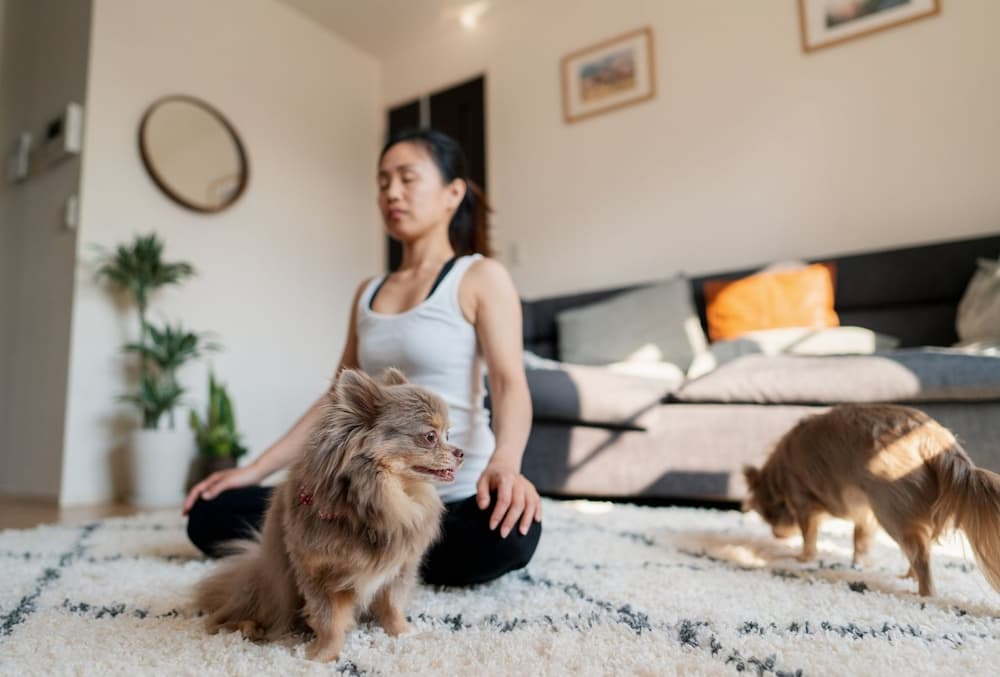
photo from Canva
3. Decide How Much Time You Can Give It
Even if your intention is to meditate for 30 minutes every day, it’s important to start with a length of time that actually fits your real routine. It’s better to begin with less time, until the habit is established, and build up from there.
It’s also worth deciding the maximum time you can realistically give this right now, without it causing you stress, as well as the minimum you’ll accept on days when you’re truly short on time.
These numbers are also tied to your experience with meditation. If you’ve never practiced before, expecting to sit for a full half hour right away isn’t a realistic goal (not impossible, but you’re far more likely to give up after a few days). Start shorter, even if it’s just five minutes.
For me, the realistic target is 15 minutes (the one I use most often), sometimes 10, and the bare minimum is 5 (for you it might be less: even sitting in silence for one minute can be a way of building the habit). Yes, I still have days when I don’t manage it, but they’re no longer the majority.
4. Create a Trigger and a Reward
As I learned from @flordemim, it helps to create a trigger, something you always do right before meditating, that leads your brain to associate that action with meditation. It could be having a cup of tea, lighting incense, anything really. In my case, it might sound a little silly, but my trigger is going to the bathroom as soon as I wake up. I get up, go to the bathroom, and then I meditate.
It also helps to choose a reward for keeping up the habit (a reward that’s actually good for you; eating sweets probably isn’t the best idea). For me, the reward is simply feeling better after meditating, and the satisfaction of having kept a commitment to myself. I use a habit tracking app on my phone, and just checking off that habit for the day gives me a real sense of accomplishment.
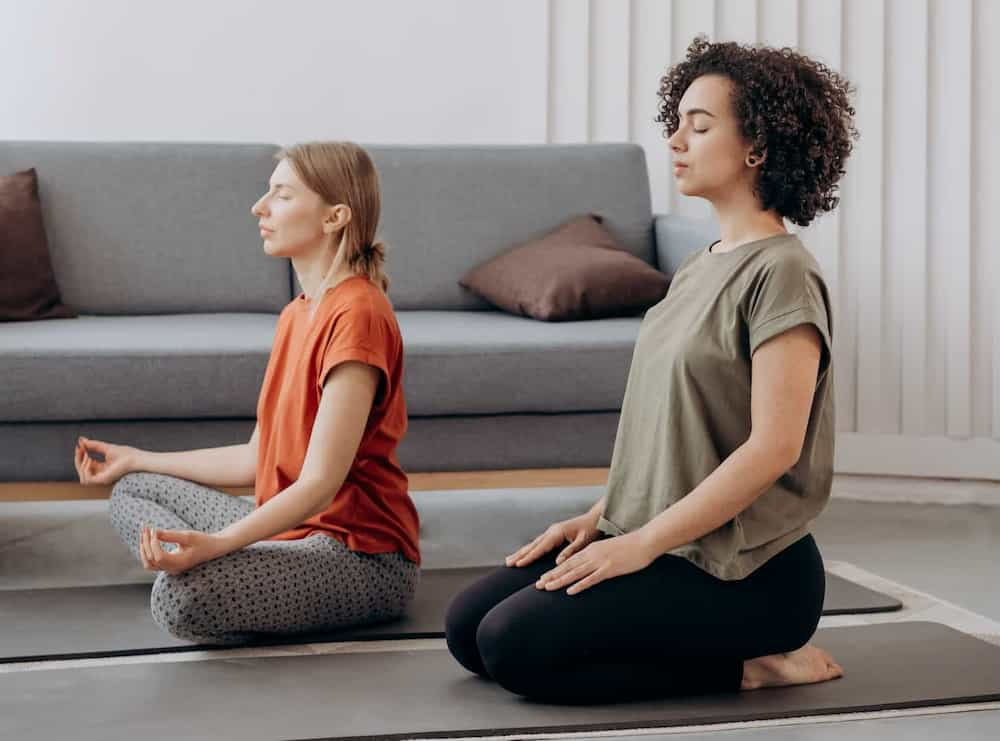
Photo of Mikhail Nilov on Pexels
5. Find the Meditation Technique That Works for You
There are countless meditation techniques, as well as mindfulness practices (a good way to ease into the habit). How do you find what works best for you? By trying, by testing out different techniques.
Keep in mind that meditation takes practice, like anything in life. As children, we didn’t learn to walk overnight. Meditation is no different: it takes training, and more training. Some days will be easier than others, and that’s completely fine. Training your concentration is genuinely challenging. What matters is not falling into judgments like “ugh, I got distracted again”: our minds were built to think, that’s simply a fact, there’s no getting around it.
What we’re actually training, through meditation, is the mind’s ability to settle on a single point of focus, so that the frequency of our mental activity gradually slows down, giving us access to subtler states of the intellect and greater mental clarity. This doesn’t happen overnight, not in a month, not even in a year. But just as important as the destination is the path we walk to get there, and everything we learn along the way.
You can start by installing an app with guided meditations, if that feels easier, or by using techniques you’ve already learned from your yoga teacher. Or, for the first few months, simply sit in your chosen spot, at your chosen time, and let your mind wander, gently noticing the nature of your thoughts, without judgment, letting them flow.
If it helps, set a timer, so you’re not worrying about how much time has passed. Long term, the goal is for meditation to become quieter and quieter (which means even guided meditations should involve less and less guidance over time).

Photo of Mikhail Nilov on Pexels
More Tips for Meditation Success
Ideally, we meditate seated, preferably cross-legged, for stability and to help direct our energy. We want the spine to become increasingly upright and lengthened during meditation. That’s why practicing asanas matters so much: it strengthens the spine and helps us feel comfortable in that position.
Until that comfort arrives, you can choose whatever position feels more comfortable, ideally one where you stay alert (the goal isn’t to fall asleep). You could, for example, sit against a wall with your legs stretched out, if that’s easier for you, or sit on a chair.
Training your breath control, built through prāṇāyāma, is also a great ally here. When you settle your breath, you allow the subtler bodies to settle too, your emotions and your mind, helping you progress in meditation more quickly.
Experts say that building a habit in the brain takes 21 consecutive days. So, at least in the beginning, it’s worth tracking the days you actually followed through. Even after that initial phase, keeping a record (digital or on paper) helps you stay aware, not just of the days you missed, but also of what you’ve accomplished.
If it makes sense for you, encourage the people you live with to meditate too, but don’t wait for them to start your own practice. Let that be an encouragement, not an obstacle. You could also start the challenge with a friend, so you can motivate each other.
Share your progress, or your struggles, with us in the comments.
Happy meditating!